Ceiling Fan Install With New Wiring Done Right
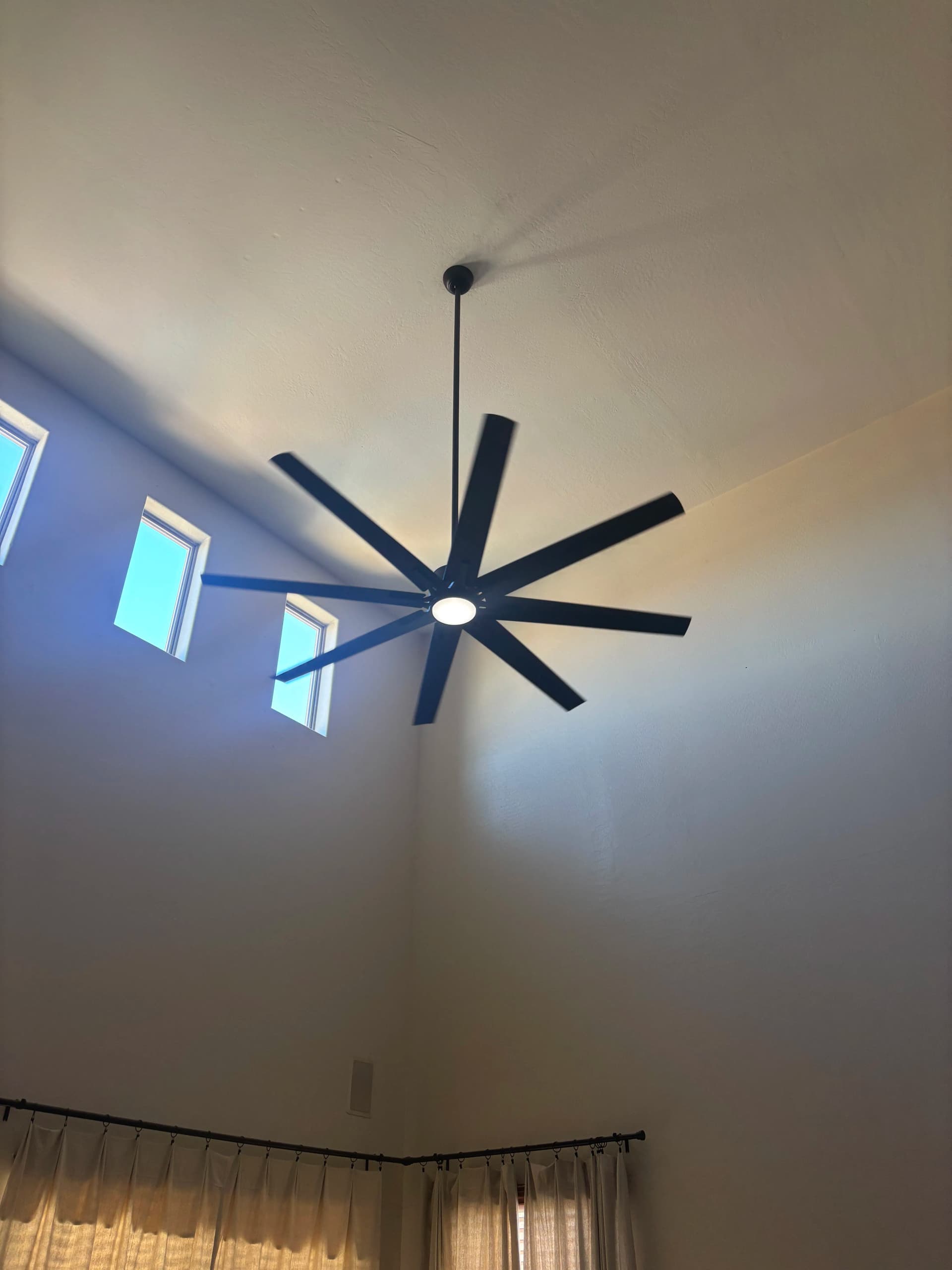
Sometimes a ceiling fan stops working and it's not the fan itself - it's the wiring behind the scenes. That's exactly what we ran into here. The existing wiring was damaged, which meant the fixture wasn't going to work safely no matter what. So before anything else, we ran new wire to make sure this homeowner had a solid, reliable foundation for the upgrade.
Damaged wiring is one of those things that's easy to ignore until it becomes a real problem. A fan that flickers, hums, or just won't turn on isn't just annoying - it can be a sign that something more serious is going on inside the ceiling. Getting it checked out early saves headaches down the road.
Once the wiring was sorted, we installed this large 9-blade ceiling fan in a room with seriously high ceilings. A fan this size in a tall space like this actually makes a difference. It moves air efficiently across a bigger volume, which means the room stays comfortable without overworking the HVAC.
The result is a fixture that looks sharp and actually works the way it should. Clean install, proper wiring, no shortcuts. That's how ceiling fan installation should go every time.